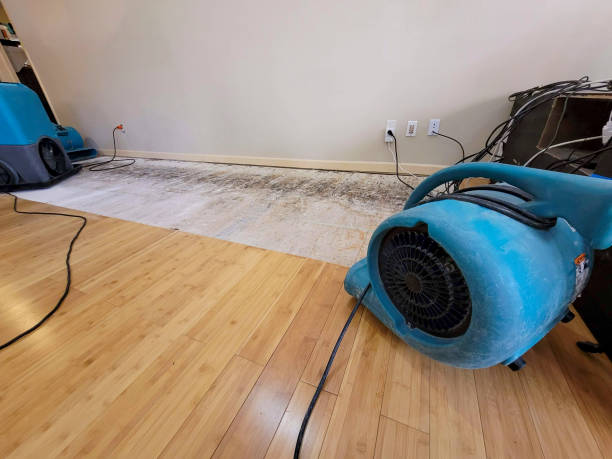
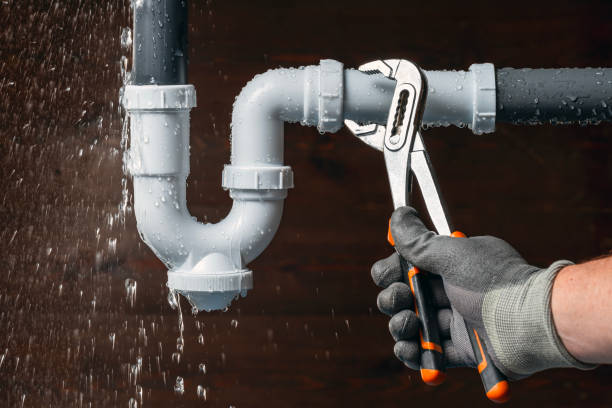
Every region of Maryland, MD brings its own water damage risks, from coastal humidity to inland flash flooding, and our dispatch network places a licensed crew close enough to respond fast no matter which part of the state you're calling from.
Call +1-844-234-5373 Now
Aqua Guard Water Damage has grown its Maryland, MD presence by adding regional crews rather than routing every call through one central office, which keeps response times honest no matter where in Maryland, MD you're located.
Local pricing matters, and our Maryland, MD estimators quote based on regional material and labor costs instead of a flat number that ignores where in the state the job actually is.
We also carry direct experience working alongside insurance adjusters, so the documentation we generate on day one is already formatted the way most carriers expect to see it.

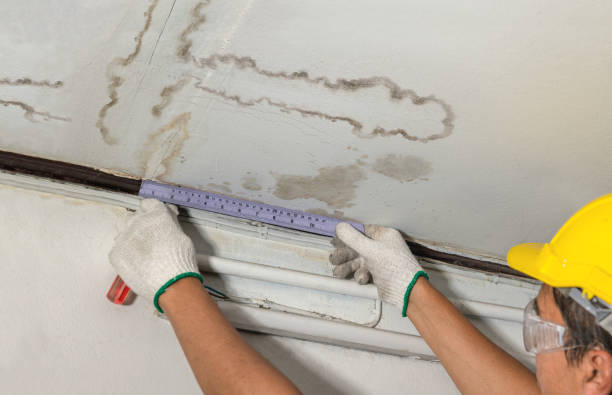
A stain that keeps reappearing after you paint over it is a signal, not a coincidence — the moisture source behind the wall hasn't been addressed and needs a moisture meter reading, not a fresh coat of paint. Repainting without finding the source just hides the problem for a few more weeks.
Musty odors that seem to follow you from room to room often mean the HVAC system is circulating spores from a hidden wet area, which spreads the problem rather than solving it.
Tile that suddenly sounds hollow when you tap it often means the mortar bed underneath has been sitting in moisture long enough to lose adhesion. That hollow sound rarely resolves on its own.
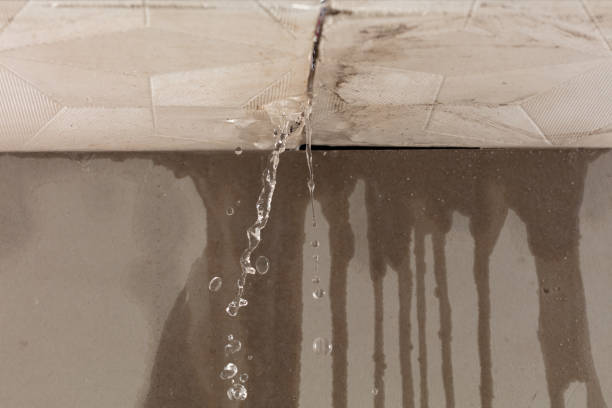
An unexplained jump in your water bill is frequently the first sign of a slab leak or a failing supply line long before any visible water appears. Catching it at this stage is far cheaper than waiting for a visible flood.
Bubbling near a window or exterior wall frequently points to a flashing or seal failure letting water into the wall cavity a little at a time.
Dark spotting in grout lines or around window frames is often the first visible sign of a moisture problem that's been developing for weeks.
Our Water Damage Repair process covers every stage of a water loss, from the first extraction pass to the final coat of paint, so you're never left coordinating separate contractors mid-project.
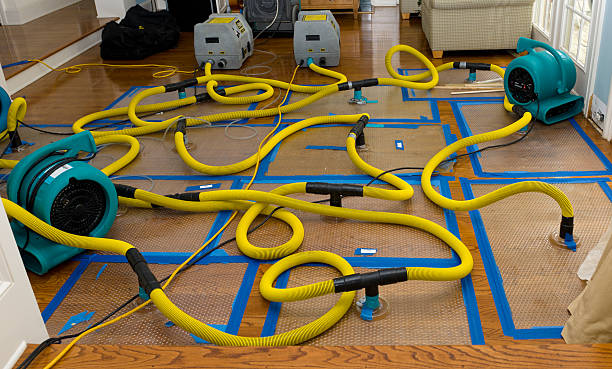
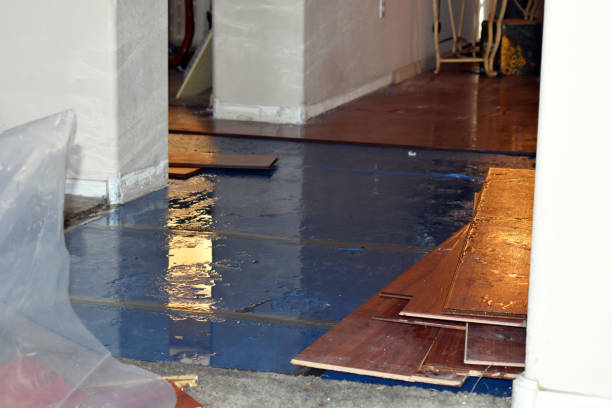
Our crews arrive with truck-mount extraction units capable of pulling thousands of gallons per hour, using moisture meters to classify the water as Category 1, 2, or 3 before drying even starts.
Equipment placement isn't guesswork; it's calculated from psychrometric readings taken at the start of the job and adjusted daily as conditions change.
Our sewage cleanup protocol follows IICRC S500 contamination standards, isolating the affected area, removing unsalvageable materials, and disinfecting every surface that had contact with blackwater.
Because mold can establish in as little as 48 hours, our drying timeline is built around beating that window rather than treating mold prevention as an afterthought.
We handle everything from replacing water-damaged drywall and insulation to refinishing floors, so the property is restored to pre-loss condition under one contract instead of three.
We inventory and pack out contents that need to leave the affected area during drying, then coordinate their return once the space is verified dry and repairs are complete.


A real person answers, gathers the details of your water loss, and routes the closest available crew immediately.
Technicians arrive with moisture meters and thermal cameras to map exactly how far the water has traveled, including inside walls and under flooring where you can't see it.
We set drying equipment based on the specific moisture readings taken during assessment, not a generic placement pattern.
Final verification is where a lot of shortcuts get taken industry-wide — we treat it as mandatory, not optional.
We operate under proper licensing and insurance in every market we serve, with documentation available on request.
A crew close by isn't a marketing line — it's the difference between drying equipment running in an hour versus waiting half a day.
Flat-rate pricing means the number we quote is the number you pay, regardless of how long the drying cycle takes.
If a drying target isn't met on the first pass, we extend equipment placement at no extra charge until moisture readings confirm the structure is dry.
Every job closes with documented moisture verification, because a guarantee that isn't backed by data isn't much of a guarantee.
That same standard applies whether it's a single flooded bathroom or a full commercial loss — the sign-off criteria don't change based on job size.
Call +1-844-234-5373Our Maryland, MD coverage spans every major population center, with local dispatch handling the routing so response times stay consistent statewide.
Statewide coverage means a homeowner two hours from our nearest office still gets a response time measured in tens of minutes, not hours.

"I called in a panic at 11pm and someone actually picked up. The tech here in Maryland, MD had air movers set up before midnight and explained exactly what they were doing and why."
James R., Maryland, MD"What impressed me most was the daily moisture log — I could actually see the numbers improving instead of just being told to trust the process."
Denise M., Maryland, MD"They didn't cut corners on the contaminated water cleanup even though it would have been faster to skip the sanitization step — that mattered to me given we have young kids in the house."
Marcus T., Maryland, MD"Fast response, clear pricing, and they coordinated directly with my insurance adjuster which saved me a huge headache during a stressful week."
Priya S., Maryland, MD"The thermal imaging inspection found damage behind a cabinet we never would have thought to check, which probably saved us from a much bigger mold problem down the road."
Carlos V., Maryland, MD"They minimized business disruption by sectioning off the wet area instead of shutting down the whole space during drying."
Angela F., Maryland, MD"The tech explained exactly which boards needed to come out and which ones tested dry enough to keep, so we didn't pay to replace more than necessary."
Tyrone B., Maryland, MD"Storm runoff got into our crawl space and the smell alone told us something was wrong. The crew found the vapor barrier had failed and fixed the actual cause, not just the symptom."
Wendy K., Maryland, MD